
what are the normal problems of the water well drilling bit

 1. Drill bit wear

Cause:
High formation hardness and abrasiveness
Unreasonable setting of drilling parameters, such as too high drilling pressure and too high rotating speed
Poor performance of drilling fluid, lubrication and cooling effect is not good
Poor bit material or heat treatment process
Performance: Blunting, chipping, chipping angle, flattening, rounding, etc. of tooth edge
Impact: Decrease in drilling speed, increase in drilling cost, decrease in drilling quality.

2. Drill bit fracture
Cause:
Excessive impact load, such as encountering hard objects or sudden changes in the formation.
Excessive torque, exceeding the torque limit of the drill bit.
Defective material of drill bit
Loose tool joints
Manifestation: The drill bit breaks into several pieces and the drilling tool is stuck in the well.
Impact: Drilling operations are interrupted, making salvage more difficult and causing economic losses.

3. Drill bit sticking
Cause:
Poor performance of drilling fluid, high viscosity or excessive solid content.
The formation is viscous and easily adsorbs the drill bit.
Excessive drilling pressure, resulting in excessive friction between the drill bit and the well wall.
Manifestation: Difficulty in lifting the drilling tool and rotating it.
Impact: Drilling operations are interrupted, making it more difficult to unjam the drill bit.

4. Drill bit jamming
Cause:
Ground collapse, clogged with drill cuttings.
Drill bit falls into crack or hole
Kinking or jamming of drilling tools
Manifestation: The drill tool cannot move up and down or rotate.

Impact: Drilling operations are interrupted, making it more difficult to unjam the drill tool, or even leading to tool scrap.


5. Drill Bit Grinding
Cause:
The centerline of the drilling tool does not coincide with the centerline of the borehole.
Poor performance of drilling fluid and poor flushing effect.
Uneven stratigraphy and large difference in hardness
Manifestation: Drilling is skewed and the hole diameter is not round.
Impact: Affect the quality of the borehole and increase the amount of casing work.
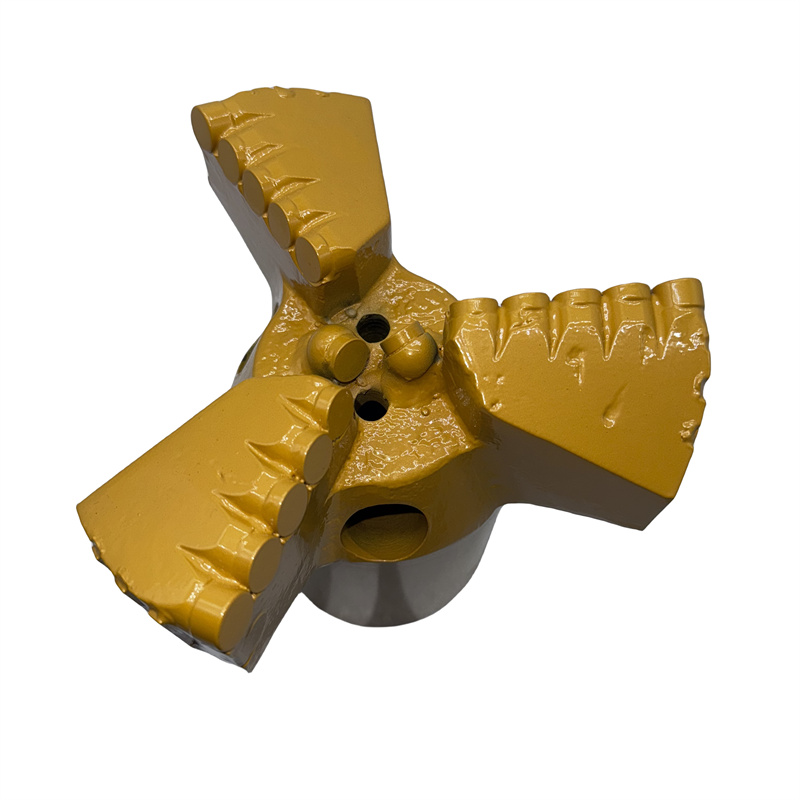
If you need to buy brand new water well drill bits, click the link below to contact our professional team directly.

Contact us

Comments

Popular posts from this blog

Where does the fluid go after leaving the mud pump

After leaving the   Mud Pump , the fluid will follows a specific circulation path in the drilling system. The drilling mud serves multiple purposes, including cooling and lubricating the drill bit, carrying cuttings to the surface, and maintaining wellbore stability.  1. High-pressure discharge line: The pressurized drilling mud exits the mud pump through a high-pressure discharge line. This line is typically connected to the top of the pump and transports the mud to the next component in the circulation system. 2. Standpipe: The high-pressure discharge line is connected to a vertical pipe called the standpipe. The standpipe provides a conduit for the drilling mud to flow from the pump to the top of the  Drilling Rig . 3. Rotary hose: At the top of the standpipe, the drilling mud enters a flexible high-pressure hose known as the rotary hose. The rotary hoseis connected to the swivel, which allows the drilling mud to be transferred to the drill string. 4. Drill string: The...

What are the differences bewteen core drilling bits and pdc drilling bits

  Although both core drills and PDC drills are tools used for drilling and sampling, there are significant differences between them in terms of material, structure, and scope of application. Core Drill Definition: A core drill is a broad concept that refers to all drills used for coring operations. It can be a variety of types such as tungsten carbide bits, PDC bits, diamond bits and so on. Function: Mainly used to remove a cylindrical section of core sample from different types of materials for subsequent analysis and research. Material: Various materials, including carbide, diamond, PDC, etc. Different materials are selected according to the hardness and toughness of the drilling material. Structure: Relatively simple structure, mainly consists of drill body, inner cylinder and outer cylinder. Application:  Wide range of applications, including geological exploration, engineering survey, mineral exploration, etc. PDC Drill Bit Definition: PDC drill bit is a special coring dr...

What's the difference between drill bit and drill rig lubricants

  Drill lubricant (or cutting fluid, coolant) Main function: Cooling: The drill bit generates a lot of heat during high-speed rotation and cutting, and the main function of the lubricating fluid is to take away this heat and prevent the drill bit from overheating and wearing out or even being damaged. Lubrication: Reduce the friction between the drill and the workpiece, reduce the cutting force, and improve the machining precision and surface finish. Chip removal: Remove the chips generated during the cutting process to prevent clogging and secondary cutting. Anti-corrosion: Protect the workpiece and drill bit from rusting. Type: Water-based cutting fluid: water as the main ingredient, add lubricants, rust inhibitors and other additives, cooling effect is good, the cost is low, but the lubricity and rust resistance is relatively poor. Oil-based cutting fluid: mineral oil or synthetic oil as the main component, good lubrication and rust resistance, but the cooling effect is relative...