
How to choose the right drilling bit diameter and length

The selection of drill bit diameter and length directly affects the drilling effect and efficiency, which is an essential part of drilling project. Choosing the right drill bit size can improve drilling speed, reduce the loss of drilling tools and ensure the quality of the project.


Factors affecting the selection of drill bit diameter and length
Requirement of hole diameter: The final diameter of the drill hole determines the diameter of the drill bit.

The nature of the formation:

Hardness: Hard formations require smaller bit diameters to minimize drilling pressure and reduce bit wear.
Stratigraphy: Stratified and fractured formations are prone to bias wear of the drill bit and require a suitable diameter to minimize bias wear.
Drilling depth: The drilling depth determines the length of the drill bit. Generally speaking, the greater the drilling depth, the longer the length of the drill bit.
Rig performance: The torque, lifting capacity and other parameters of the drilling rig limit the maximum diameter and length of the drill bit.
Drilling fluid properties: The density and viscosity of the drilling fluid affect the discharge of drill cuttings, which in turn affects the selection of bit diameter.

Principles of bit diameter selection
Selection according to the requirement of hole diameter: The diameter of the drill bit should be slightly smaller than the hole diameter to ensure the smoothness of the hole wall.
Consider the nature of the formation: choose a smaller diameter for hard formations and a slightly larger diameter for soft formations.
Consider the nature of the drilling fluid: when the viscosity of the drilling fluid is high, choose a slightly larger diameter to facilitate the discharge of drill cuttings.

Selection of drill bit length
Selection according to drilling depth: The length of the drill bit should be slightly longer than the drilling depth, with a certain margin.
Considering the performance of the drilling rig: If the drill bit is too long, it is easy to produce bending and vibration, which will affect the drilling quality.
Consider the nature of the drilling fluid: When the viscosity of the drilling fluid is high, a slightly shorter bit can be selected to reduce friction resistance.

Relationship between bit diameter and length

Bit diameter and length are not isolated, there is a certain relationship between them. Generally speaking, the larger the diameter of the drill bit, the shorter the length of the drill bit; the smaller the diameter of the drill bit, the longer the length of the drill bit.
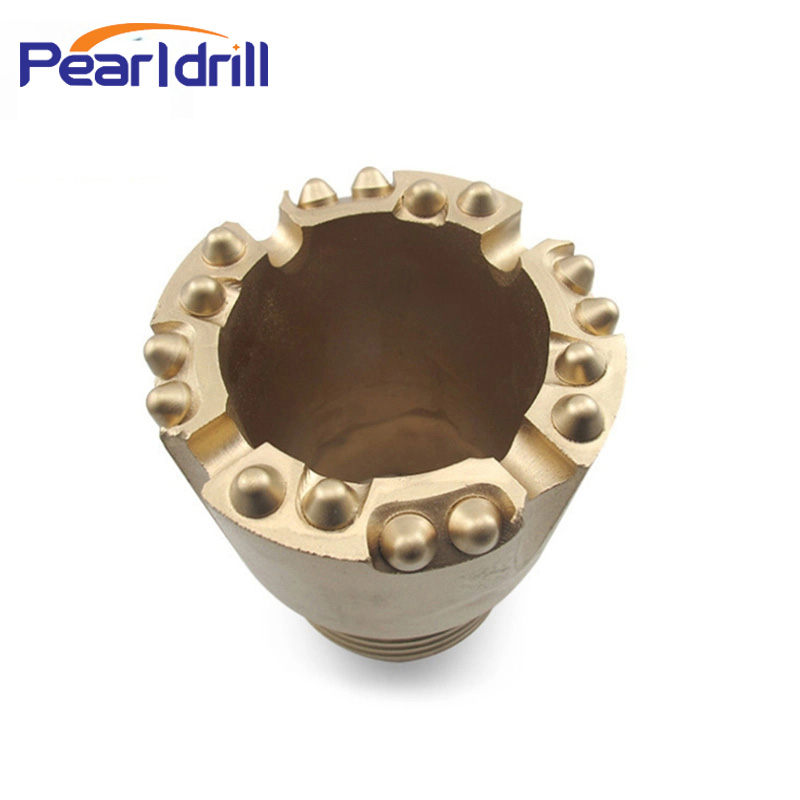

If you don't know how to choose the right water well drill bit, click the link below to contact our professional team.

Contact us

Comments

Popular posts from this blog

Where does the fluid go after leaving the mud pump

After leaving the   Mud Pump , the fluid will follows a specific circulation path in the drilling system. The drilling mud serves multiple purposes, including cooling and lubricating the drill bit, carrying cuttings to the surface, and maintaining wellbore stability.  1. High-pressure discharge line: The pressurized drilling mud exits the mud pump through a high-pressure discharge line. This line is typically connected to the top of the pump and transports the mud to the next component in the circulation system. 2. Standpipe: The high-pressure discharge line is connected to a vertical pipe called the standpipe. The standpipe provides a conduit for the drilling mud to flow from the pump to the top of the  Drilling Rig . 3. Rotary hose: At the top of the standpipe, the drilling mud enters a flexible high-pressure hose known as the rotary hose. The rotary hoseis connected to the swivel, which allows the drilling mud to be transferred to the drill string. 4. Drill string: The...

What are the differences bewteen core drilling bits and pdc drilling bits

  Although both core drills and PDC drills are tools used for drilling and sampling, there are significant differences between them in terms of material, structure, and scope of application. Core Drill Definition: A core drill is a broad concept that refers to all drills used for coring operations. It can be a variety of types such as tungsten carbide bits, PDC bits, diamond bits and so on. Function: Mainly used to remove a cylindrical section of core sample from different types of materials for subsequent analysis and research. Material: Various materials, including carbide, diamond, PDC, etc. Different materials are selected according to the hardness and toughness of the drilling material. Structure: Relatively simple structure, mainly consists of drill body, inner cylinder and outer cylinder. Application:  Wide range of applications, including geological exploration, engineering survey, mineral exploration, etc. PDC Drill Bit Definition: PDC drill bit is a special coring dr...

What's the difference between drill bit and drill rig lubricants

  Drill lubricant (or cutting fluid, coolant) Main function: Cooling: The drill bit generates a lot of heat during high-speed rotation and cutting, and the main function of the lubricating fluid is to take away this heat and prevent the drill bit from overheating and wearing out or even being damaged. Lubrication: Reduce the friction between the drill and the workpiece, reduce the cutting force, and improve the machining precision and surface finish. Chip removal: Remove the chips generated during the cutting process to prevent clogging and secondary cutting. Anti-corrosion: Protect the workpiece and drill bit from rusting. Type: Water-based cutting fluid: water as the main ingredient, add lubricants, rust inhibitors and other additives, cooling effect is good, the cost is low, but the lubricity and rust resistance is relatively poor. Oil-based cutting fluid: mineral oil or synthetic oil as the main component, good lubrication and rust resistance, but the cooling effect is relative...